
Assignment Management | Whitepaper
International assignments are essential for companies entering new markets, transferring knowledge across regions, and developing global leadership pipelines. For mobility teams, managing these assignments is both a strategic function and a logistical challenge.
An international assignment typically involves relocating an employee to a host country for a defined period, often one to three years. It serves a variety of organizational goals, including market expansion, project support, or leadership development. For an employee, this can be a career-defining opportunity that fosters personal and professional growth, provides cross-cultural experiences, and opens the door to future leadership roles.
The assignment’s success hinges on meticulous planning and management.
Despite the many benefits, international assignments also have many moving parts. Employers need to consider immigration, expense management, employee and family support, and repatriation planning. This is where a relocation management company (RMC) like WHR Global becomes an essential partner. RMCs serve as a single point of coordination, managing all logistical and strategic components of an international assignment.

6 Phases of the Assignment Management
The Assignment Management lifecycle can be divided into six key phases:
Introduction, Pre-Relocation and Preview, Relocation, Settling-In, Assignment, and Repatriation
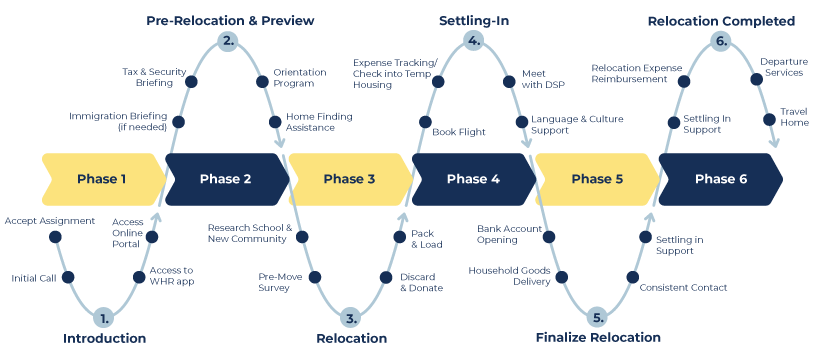
Each phase requires thoughtful planning and tailored services. The process begins with defining the business case for the assignment.
The employer reviews the strategic need, expected outcomes, and identifies the most suitable employee. Assignment policies are established or reviewed, including compensation, benefits, and entitlements.
The whitepaper will explore each phase and discuss the role an RMC can do to ensure success.
Phase 1 – Introduction
The Introduction phase serves as the first step in setting up a successful international assignment, ensuring both employee and employer are aligned with logistical and regulatory aspects of relocation.
Once the employee accepts the assignment and the RMC has received the authorization to proceed, the RMC’s Relocation Counselor (RC) schedules an initial call with the employee for a needs assessment.
- The initial call is completed on the same or next business day after receipt of initiation
- Virtual meeting conducted with the employee, spouse/partner, and executive assistant
- During the initial call, the RC will collect needs, address timelines, and explain all available benefits
- This call allows the RC to align the transferee’s expectations with your policy and ensure exceptions

Key Services include:
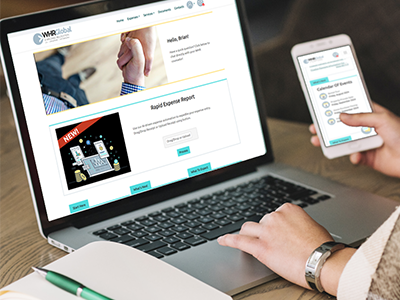
- Access to Online Portal/Mobile App
- Immigration Briefing
- Tax & Security Briefing
This phase sets the groundwork for the next steps in the assignment. The information shared during the introduction will ensure that the employee is prepared for the upcoming relocation process and can transition into the pre-relocation phase with confidence.
Phase 2 – Pre-Relocation
The Pre-Relocation & Preview phase addresses logistical needs and provides a clear overview of what the employee and their family can expect when they arrive in the host country.
Key Services include:
- Area Orientation
- Home Finding Assistance
- School Search
- Pre-Move HHG Survey
By proactively addressing housing, schooling, and cultural adjustments in this phase, the employer can prevent costly disruptions and avoid delays once the employee arrives. Early home finding and school visits reduce the risk of an employee feeling dissatisfied or overwhelmed by their living situation, which is a common cause of early assignment failure. These efforts lead to improved employee satisfaction, reducing the likelihood of repatriation or early termination of the assignment.
This phase prepares the employee and their family for the logistical steps of the move. With housing, schools, and other essential preparations sorted, the employee is more likely to focus on settling into their new country, making the subsequent relocation process smoother.

Ensure the services you are offering provide adequate support to your employees
Phase 3 – Relocation

See Global Temporary housing prices in select cities across Americas, EMEA and APAC
This is the crucial operational phase where physical aspects of the move are handled. Proper execution during this phase ensures the employee and their family are settled quickly and comfortably.
Key Services include:
- Discard & Donate
- Pack & Load
- Book Flight
- Household Goods Tracking
- Check into Temp Housing
The logistical coordination in this phase can lead to significant cost savings by ensuring the move is efficient and well-planned. Companies can reduce shipping and storage costs by helping employees discard unnecessary items and providing professional packing services. Pre-arranged temporary housing also mitigates the stress of finding accommodations immediately upon arrival, which could otherwise result in additional costs or delays.
The relocation process sets the stage for the employees’ transition into their new environment. The focus now shifts from logistics to integration, where settling-in services will play a crucial role in helping employees and their families feel at home.
Phase 4 – Settling-In
Once the employee and their family have arrived, the Settling In phase ensures a smooth transition into daily life in the host country.
Key Services include:
- Meet with Destination Services Provider (DSP)
- Language and Cultural Support
- Open Bank Accounts
- Household Goods Delivery
Ensuring a seamless transition into the host country helps improve employee satisfaction and reduce the likelihood of a failed assignment. Language and cultural support not only aid in integration but also enhance the employee’s productivity and job satisfaction.
Additionally, setting up local financial accounts ensures employees can manage expenses efficiently, preventing unnecessary complications or delays.
Once the employee is settled into their new home and lifestyle, the focus shifts to providing ongoing support throughout the assignment. The employee’s continued satisfaction is crucial for the success of the entire assignment.

Language classes and cultural coaching help employees and their families integrate into their new environment
Phase 5 – Assignment

The Assignment Period is the heart of the relocation. During this period, the employee is fully integrated into their role, and the RMC provides continuous support to ensure ongoing success.
Key Services include:
- Consistent Contact
- Spousal Support
- Settling In Support
- Relocation Expense Reimbursement
Ongoing communication and proactive problem-solving reduce the risk of assignment failure or early repatriation. Spousal support and settling-in assistance ensure the family is well-adjusted, improving the employees’ performance and reducing the likelihood of costly disruptions.
As the assignment period progresses, the focus shifts toward preparing their repatriation or reassignment and proper planning during this phase ensures the transition is as smooth as possible.
Phase 6 – Repatriation
The final phase focuses on preparing employees for departure and ensuring they are successfully reintegrated into their home country or reassigned to another location. A well-executed repatriation process minimizes the emotional and financial costs associated with the return process.
Key Services include:
- Departure Services
- Travel Home
- (Optional) Career & Cultural Re-adjustment Support
The repatriation phase closes the loop on the international assignment, reinforcing the value of the experience for both the employee and the company. The lessons learned in this phase can be applied to future assignments, helping employers refine their global mobility strategies.

Summary

Managing international assignments involves much more than just logistics; it is about providing comprehensive, tailored support to employees and their families at each stage of the relocation. By partnering with an RMC, employers can streamline processes, reduce costs, and ensure high levels of employee satisfaction throughout the assignment lifecycle.
Each phase of assignment management connects seamlessly to the next, creating a comprehensive support system that enhances both the employee’s experience and the company’s return on investment. By leveraging the full range of services and expertise offered by RMCs, organizations can achieve strategic goals, mitigate risks, and ensure the success of their global mobility programs.
Interested in how your policies compare to
what is offered by other organizations?
Download our Mobility & Culture Benchmark Study