SWOT Analysis on Modern Work Environments | Whitepaper
As the modern workplace continues to evolve, the question of where work should take place is a topic of ongoing debate.
The three dominant models (fully in-office, fully remote, and hybrid) each come with their own set of distinct benefits and drawbacks. Selecting the right model is a critical decision that requires a careful balance between organizational goals, employee satisfaction, and long-term retention.
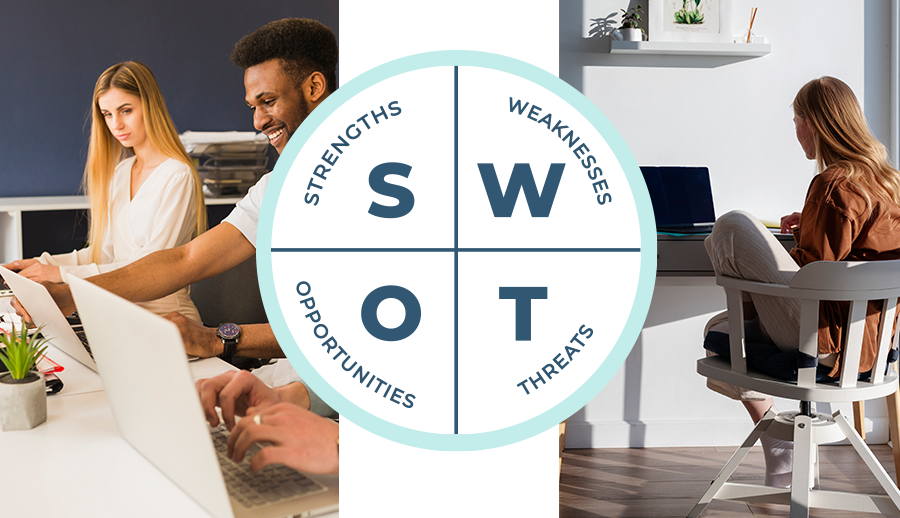
Our SWOT analysis breaks down the strengths, weaknesses, opportunities, and threats of each model, offering valuable insights to help organizations identify the path that best supports their goals and supports a thriving, engaged, and happy workforce.
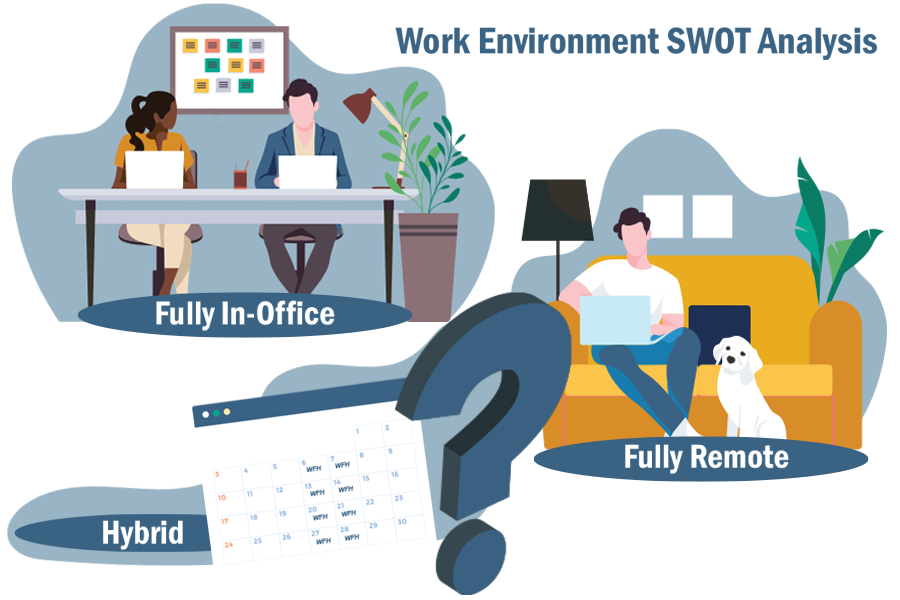
The whitepaper includes an analysis of 3 physical work scenarios:
• Fully In-Office Work
• Fully Remote Work
• Hybrid Work
Fully In-Office Work
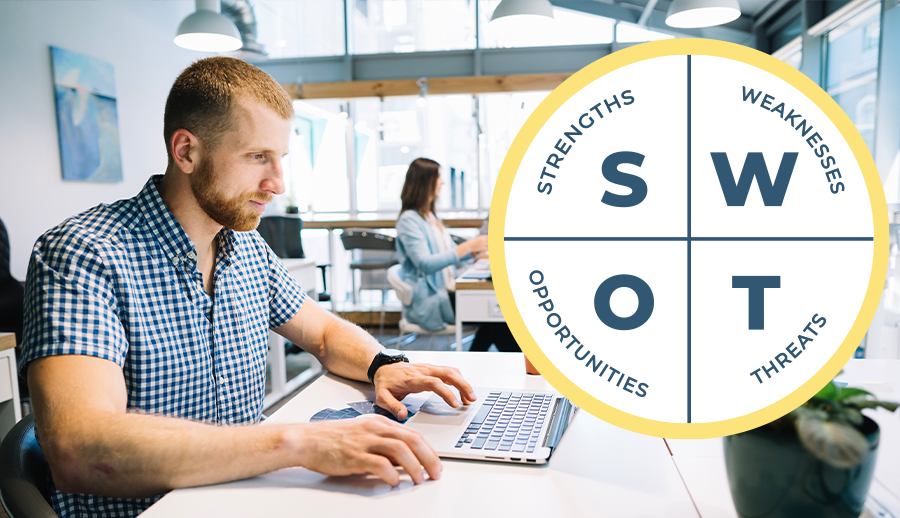
STRENGTHS
Employees collaborate more effectively in person, with higher engagement in brainstorming, relationship building, and on-the-job learning. In-office settings also boost productivity, meeting preparation, and access to informal managerial feedback, which many remote and hybrid workers feel they miss out on.
WEAKNESSES
Many employees prefer remote or hybrid work, with 95% wanting some level of flexibility and 46% willing to quit if forced back to the office full-time. In-office work is associated with higher stress, commuting time, and expenses, while remote work enhances work-life balance and is perceived by many as more practical than returning to the office for traditional or real estate-driven reasons.
OPPORTUNITIES
A fully in-office model offers unique opportunities to strengthen organizational culture and foster spontaneous collaboration. In-person environments naturally support mentorship, team bonding, and real-time problem-solving, which can accelerate innovation and employee development. Companies also see the office as a space to reinforce corporate identity and values—elements that are harder to cultivate remotely. According to Harvard Business Review, face-to-face interactions are especially valuable for creative work and complex decision-making, where non-verbal cues and immediate feedback enhance outcomes.
THREATS
A significant majority of IT managers (60%) express concern that remote work arrangements, including hybrid models, elevate the risk of data breaches for their organizations. This likely stems from the challenges of maintaining robust security protocols outside the controlled office environment, as home networks may be less secure and using personal devices for work could introduce vulnerabilities.
Fully Remote Work
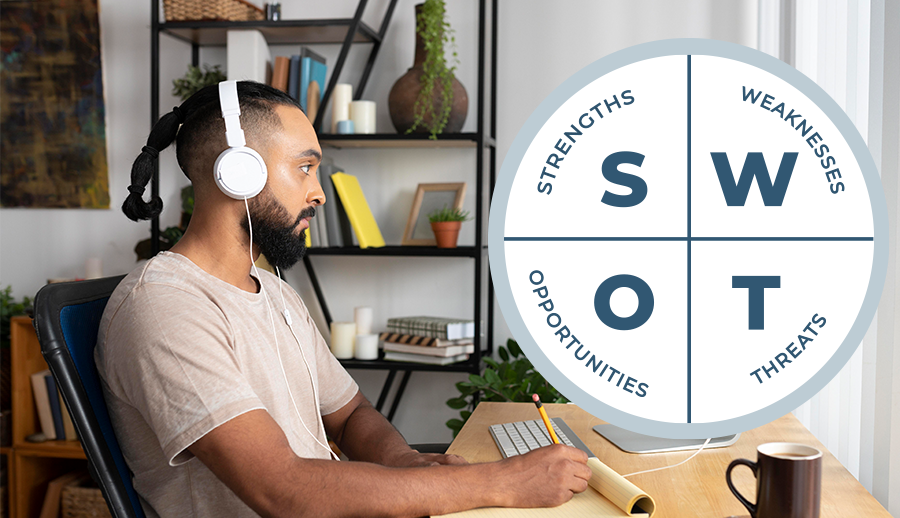
STRENGTHS
Remote work boosts talent retention, with nearly half of employees unwilling to stay in jobs that eliminate work-from-home options, while also saving companies up to $10,600/employee in overhead costs. Employees benefit from time and financial savings, improved well-being, and greater job satisfaction, with 95% preferring some form of remote work and 70% finding it enhances focused work.
WEAKNESSES
In-person interactions foster collaboration and stronger relationships, while remote employees face challenges in onboarding, career visibility, and feeling connected. Specifically, 55% of workers struggle with coworker relationships, and 60% worry about missing opportunities. Additionally, remote work raises concerns for managers regarding productivity, IT support, and informal feedback, while employees admit to engaging in non-work activities like social media (75%) and online shopping (70%).
OPPORTUNITIES
The desire for remote work has become a critical priority for a vast majority of job seekers, outweighing salary requirements. A significant proportion of individuals actively seek flexible work and would decline job offers that mandate full-time in-office. This strong preference creates a valuable opportunity for companies, enabling them to access a broader and potentially global talent pool transcending traditional geographical limitations and allowing them to attract skilled professionals who prioritize location flexibility. In fact, over 95% of workers desire some form of remote work.
THREATS
Planned relocations can lead to operational efficiencies by centralizing key functions or redistributing expertise. Furthermore, a globally distributed workforce can enhance organizational agility and resilience, mitigating risks associated with geopolitical instability and economic uncertainties. Companies will need to factor in geopolitical instability and potential travel restrictions when planning global market access strategies.
Hybrid Work Environment
STRENGTHS
Hybrid work models strike a balance between collaboration and productivity, with in-person interactions fostering brainstorming while remote work enhances efficiency—90% of hybrid workers report feeling equally or more productive. Additionally, hybrid arrangements enhance employee engagement, satisfaction, and talent retention, as workers feel more connected to the company culture and experience a better work-life balance.
WEAKNESSES
Managers perceive remote and hybrid workers as potentially missing out on informal feedback, with 44% believing they are just as productive or less productive than in-office employees. Additionally, remote workers engage in non-work activities like social media (75%) and online shopping (70%), while 63% worry that managers view in-office employees as more dedicated.
OPPORTUNITIES
Remote and hybrid work options are highly attractive to job seekers, with flexibility ranking above salary and 38% declining offers that require full-time office presence. While 95% of workers desire some remote work, only 5% prefer fully in-office roles, making flexible work arrangements a key factor in talent attraction and retention.
THREATS
A significant majority of IT managers (60%) express concern that remote work arrangements, including hybrid models, elevate the risk of data breaches for their organizations. This likely stems from the challenges of maintaining robust security protocols outside the controlled office environment, as home networks may be less secure and using personal devices for work could introduce vulnerabilities.
Strategically reviewing the three most common workplace models — fully in-office, fully remote, and hybrid — and determining the best option for both your business and employee satisfaction and retention is critical in today’s market.
The SWOT framework provides insights into how each approach can impact organizational success and employee well-being, ultimately enabling a company to make informed decisions.
Ready to learn more about our global destination services?
U.S. Domestic Relocation Cost Estimator

Interactive Repayment Agreement

Domestic Relocation Policy Designer

Relocation Benchmark Comparison

RFP – Relocation Request for Proposal Generator