Updates from Around the World – February 2019

international relocation

China

The new individual income tax (IIT) law came into effect on January 1, 2019, and affects foreign individuals who live in China for 183 days or more. According to Dezan Shira & Associates, the new regulation is likely to give more room for expatriates to avoid taxation on worldwide income.
Read more about the individual income tax (IIT) law (in Chinese). 

Greece

Effective February 1, 2019, the minimum monthly salary for foreign workers in Greece has increased to EUR 650 for employees of all ages, up 11 percent from last year. As before, benefits and allowances may only be included in the minimum salary calculation if they are specified in the employment contract and are not paid in kind.
Read more about the minimum monthly salary for foreign workers in Greece.

Mexico

Review of immigration applications has been delayed several weeks past normal processing times in Mexico City, Guadalajara, Querétaro and several other large cities due to the transition to a new government. Employers and foreign nationals should expect delayed work start dates.
Read more about the delayed immigration processing.

United Kingdom

The British parliament voted in favor of the government’s proposed immigration bill, aimed to ensure it has an independent immigration policy after Brexit, late on January 28, 2019. EU citizens who plan to stay for longer than three months will need to apply for permission and receive European Temporary Leave to Remain, which is valid for a further three years.
Read more about the British parliament’s vote.

United States

The Internal Revenue Service (IRS) is open following the government shut-down and accepting 2018 federal tax returns as of January 28, 2019. Most refunds are anticipated to be sent in less than 21 days.
Read more about the Internal Revenue Service (IRS) reopening.


 

Cultivating a Culture of Teamwork

Cultural training for employees who will be working internationally is perhaps more important today than ever before.  For many companies, there has been a significant paradigm shift away from the strictly bi-cultural focus of such training, opting instead for an approach that prepares the employee for working within a multi-cultural environment.  Ideally, such training is the first step in cultivating a culture of teamwork within an organization.

In so doing, companies are able to set themselves and their employees up for greater success, while mitigating the risk of assignment failure and/or employee attrition.

Why is multi-cultural training essential today?

Given the backdrop of the global business landscape, an employee who embarks on an overseas assignment will not necessarily merely be working with a local team.  Instead, it is far more likely that the employee will be part of a global team.  That means that he or she will be working side-by-side with people of many different nationalities, cultures and backgrounds.

In putting together a global team, an organization needs to ensure that each member of that team is able to effectively work with the other members.  To accomplish that, each member of the team needs to be able to communicate with one another, and to understand some of the key differences in their cultural backgrounds.

Setting the team up for success

That’s where cultural or multi-cultural training comes in.  In many cases, it’s the best insurance policy that an organization has for setting a global team up for success.

In a nutshell, cultural training is designed to set the employee up for success prior to the assignment, by setting expectations about life in the host country, and providing coping strategies, tools and resources to help make that happen.

From a talent mobility and talent management perspective, sending employees overseas is often a critical component for achieving an organization’s business goals.  But, it is also an increasingly expensive undertaking.  Not only is the physical move itself costly, but it can also cost an organization considerably in the loss of talent.

Thus, the investment in cultural training is vital from an employee retention standpoint. Without that support and commitment to the employee’s career success, an organization could end up losing a valuable employee altogether.

Communication is the key

Communication is obviously a fundamental factor for global teams to be able to effectively work together.  But, communication across cultures can be very tricky.  Speaking the same language is great, but communication and cultural understanding requires much more than the ability to speak a language.

Through cultural training, employees also learn how to be more tolerant of each other, and they have an opportunity to gain greater insight into the cultural nuances that typically exist.  So, it’s important to recognize the key role that communication (which can be verbal and nonverbal), plays in the process.

A win-win for the employee and organization

The idea is to bring members of a global team together in a way that fosters good communication, collaboration and interaction.  If done properly, it can be a real win-win for both the employee and the organization.  To best achieve such mutual success, cultural training has to go beyond the traditional model of preparing employees to live and thrive in a new country.

Today, cultural training also needs to provide the skills necessary for employees to work with people from many cultures and countries.  It is no longer a one-on-one relationship, but rather a one-to-many relationship.

How WHR Group can help

Our company has global partnerships with industry experts across the globe, enabling us to provide cultural and language training services to help expats and their families prepare for relocation abroad. For more information on how WHR Group can assist your employees with their international move and new assignment, give us a call at 800-523-3318 or email [email protected].

WRITTEN BY: MICHELLE SANDLIN, SCRP, GMS-T

Michelle Sandlin, SCRP, GMS-T is an award-winning freelance writer and weekly columnist for the Houston Chronicle. She is also a frequent contributor to Mobility Magazine, as well as other publications, corporate blogs and white papers. She can be reached at 281.831.3112 or [email protected].

3 Benefits to Offer Your International Assignees

A strong cultural and language training program is one of the most important benefits you can offer employees who are moving abroad. International relocation is stressful on the employee as well as their family, which is why it is so easy for an employee to struggle in a new country, especially if they don’t understand the culture, customs, business culture, and language. This can lead to seclusion, depression, and ultimately, a failed transfer.
<img alt="international relocation">,<img alt="employee relocation">,<img alt="WHR Group">

Offering cultural and language assistance will allow your employee to assimilate into the new culture as quickly as possible, providing them with the tools they will need to not only succeed in their new role but thrive in their new environment as well.

International assignments are challenging for all involved: the employee, the spouse, their children, and your company. You can make the transition easier for all by offering these 3 benefits:

1. Cultural Training

Culture shock often occurs when your employees and their families are dropped into a new situation without any knowledge of their new environment. Cultural training isn’t just about learning the host country’s environment and culture, it is also about helping your employee understand their new business culture. Even though your employee may be just transferring offices, the business practices can vary greatly between different countries.

It is also important for you to find and share outside activities that will assist your employees in meeting new people, allowing them to learn the new culture and language in a more social setting. The more they immerse themselves into the culture, the happier they will be in their new position and new lifestyle.

Help and encourage your employees to learn about their new country’s history, common business and social practices, and the local customs. This ensures they truly feel at home in their new location.

2. Language Training

Language training is a benefit that is often overlooked when transferring an employee internationally. Because English is the standard business language, it is just assumed that English is the only language they will need. While this may be true in the sense that they will be able to communicate the essentials at their new office, you also have to consider how they will be able to interact outside of work. Things that were once simple, like going to the grocery store or hosting a dinner party, become daunting.

Language skills are essential to not only help your employees advance in their new positions, but also fully assimilate into their new country. Language training can begin the moment the employee accepts their new position with the use of online tools and/or in person language training sessions, and can continue even after they make the transfer.

3. Spousal and Family Assistance

Spousal and family assistance is another way of ensuring your employees experience success in their new location. The most common reason for failed transfers is family related issues. Often times, the family is forgotten about when it comes to the benefits offered. Spouses and partners leave behind careers and extended family; children leave the schools and friends they’ve come to rely on.

Offering assistance to the families of relocating employees makes the transfer more successful. The employee’s spouse may need help finding a new job or even finding the best stores to shop at. They, too, may need to find social groups to help them engage in their new environment and assistance in learning the new language. Schools are another major consideration when relocating families abroad. Children will need to learn the new culture and language as well, all while acclimating to their new school system.

Spousal and family assistance should include both cultural and language training and should begin as soon as your employee accepts their new role.

Download our Sample International Relocation Letter Today!

Use this sample International Relocation Letter to help move your employees to any location, across the globe. This template includes everything you need to get started!

How WHR Group Can Help

WHR has global partnerships with industry experts all over the world, allowing us to deliver cultural and language training services to relocating employees and their families. These experts have been evaluated to design flexible training programs based on a professional assessment of the individual’s and family’s needs, including online and/or face-to-face training preferences. We also track and report on training completion, which is provided to ensure the effectiveness of the program for everyone involved.

Contact WHR Group today for more information on our global mobility services and how to implement your culture and language training program: 800-523-3318 or [email protected].

What to Know About Relocating Goods Internationally

When moving internationally, one of the biggest decisions your employees will have to make is whether to ship their personal belongings to their new location or buy new after the move.

For employees wanting to ship their belongings, there are some things to consider:

  • Customs requirements in the departure and destination countries
  • The size of their shipment
  • Shipping options available
  • How the selected shipping option affects delivery timeframes

Similar to a U.S. relocation, international movers will pack an employee’s goods themselves, as the mov­ers are trained experts in evaluating items for international freight and making sure no items are includ­ed that violate customs. This could cause major delays in delivery. Detailed inventory forms need to be completed for both customs and insurance purposes. It’s important for your employees to complete these forms in a timely manner to avoid delays or penalties.


Types of International Shipments

Air Shipments

Air shipments are for smaller containers shipped via air. The shipments typically have a shorter tran­sit time of 1 – 2 weeks. Air containers are ideal for personal items needed shortly after arrival in the new location, such as clothes and children’s toys.

There are two main types of air containers: D containers and LDN containers, which are both pre-built containers:

  • D containers are ideal for the essential be- longings of individuals or smaller families
  • LDN containers are more typical for larg- er families, or for those not planning to transport goods via sea as well
Sea Freight

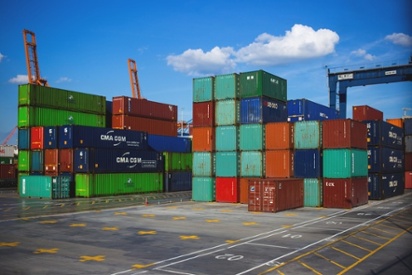
Depending on destination location, many interna­tional moves require the use of sea shipments. Sea shipments are ideal for larger shipments but have transit times of anywhere from a few weeks to a few months. Transit times are impacted by customs and practices of both the departure country and the destination country. Freight containers are metal and come in three main sizes: 20 ft., 40 ft., and 40 ft. high capacity containers:

  • 20 ft. containers are ideal for 2 – 3 bed-rooms, or individuals and small families
  • 40 ft. containers are most ideal for 4 – 5 bedrooms, or larger families with children

The moving company will conduct a visit at the employee’s home to determine which shipping option and container size is ideal for each situation.

How WHR Group Can Help

WHR Group works with a network of international movers that specialize in packing and customs requirements. It is important to support your employees with experts that understand these require­ments and what can and cannot be included in their international shipments so that your employees arrive comfortably to their new home.

The Importance of International Tax Assistance

Global compensation management and tax compliance can both significantly impact an employee when relocating across country borders. Regardless of whether the relocation is permanent or simply a short-term assign­ment, all relocation-related expenses will likely raise tax issues in both departure and destination countries.

This is why it is critical that the potential tax exposure from relocation reimbursements be monitored so that accurate tax returns can be filed in both the old and new country locations.

U.S. Employees’ Unique Tax Obligation

U.S. citizens are required to file taxes on their global income regardless of where it was earned and in addition to the tax fil­ings required in the country of assignment. When an employee transfers out of the U.S., they must still file a U.S. Federal Income tax return. However, the U.S. does provide a foreign tax credit that can be applied to the employee’s return, which means the amount owed in the U.S. could be nothing or a neg­ligible amount, but they are still required to file.

The Importance of Tax Equalization

It is strongly suggested that you provide tax equalization for employees relocating inter­nationally. This allows your employee to pay taxes as they would in their original country, with you covering the difference. This benefit is becoming more common because it taxes people at the same amount had they never taken an assignment. You would then cover the cost of the host location tax and any ad­ditional U.S. obligation that may be incurred.

For example, let’s say you are moving an employee from the U.S. to Italy. The employ­ee has a $28,000 income tax liability to Italy, but their U.S. liability would only be $25,000. You would then pay the additional $3,000 to the Italian tax authorities on your employee’s behalf.

**It is essential that the employee remain tax compliant while on assignment or after a permanent transfer. Failure to report income accurately makes the employee liable; however, if the company does not provide any support or assistance, then you run the risk of being seen as complicit as well.

How WHR Group Can Help

WHR Group provides a complete framework for tracking all expenses associated with an employee’s assignment or permanent trans­fer across borders. The data is collected and broken down into what was paid and which country the payments originated from. All of this information is then provided to a local tax expert in the relevant countries so that the appropriate tax filings can be completed. This process ensures that the employee has filed taxes in the correct countries and that the taxable relocation expenses have been considered as well.