
The Changing “Single Point of Contact”

A recent Deloitte article has rightfully called to question the necessity (and logistical possibility) of a true single point of contact (SPOC) within the relocation management process.

Take a moment to picture the intricacies of the relocation process, especially for international relocations. In the era of customer choice, transferees are faced with more options than ever when it comes to moving across borders. Deloitte explains that a SPOC for the full length of a relocation “would have to be a bona fide specialist in customs, immigration, travel, equity, home sale, employment law, and tax, among others.”

We all know that relocating is one of the most stressful events of a person’s life, which is why it’s obvious for companies like WHR Group to want to streamline the relocation process and reduce as much stress as possible for transferees. But is one person truly capable of being the subject matter expert on topics ranging from real estate to immigration?

Rather than a SPOC, WHR Group and Deloitte make the case for finding the best point of contact in today’s diverse relocation environment: “The goal should not be one point of contact, but rather the best contacts at the right movements, working together toward a common end… Experience shows that no one single person can navigate this environment as effectively as a well-organized team.”

Think of it this way: Would you rather have your transferees counseled by someone who has some knowledge of many things, or a network of people each with expert knowledge on one thing? If you’re looking for higher service scores, lower risk, and happier employees, the answer is the latter. And while WHR agrees that subject matter experts (SMEs) are critical in the relocation process, it is also the relocation provider’s responsibility to be a provider that knows the best SMEs, in their respective fields, and brings them to the table in a single-coordinated fashion for the relocating employee.

The relocation service model should bring the right people, with the right skills, at the right time for the benefit of the relocating employee. We agree that not one person can be the subject matter expert for all services, and we need to recognize our limitations as a provider. So having a skilled network of providers working behind the SPOC is the value that a relocation management company brings (and without requiring the transferee to talk to multiple points of contact). An unparalleled supply chain is what differentiates one supplier over another.

There are two reasons why WHR Group is a proponent of having a network of specialists supporting a relocation, rather than just relying on one advocate:

1. Having specialists from different relocation functions to form one network for transferees helps avoid bias.

  • WHR Group has separate Referral, Appraisal, Inventory, and Equity departments to make sure no one person is affecting the outcome of things like the listing process and, ultimately, the home sale.

2. It frees up the main Relocation Counselor’s time for higher attention to detail while functioning as a moderator instead of a SPOC.

  • While a Relocation Associate and ancillary departments assist with relocation logistics, the Relocation Counselor is able to spend more time getting to know the transferee’s unique needs and making sure every service provided through the network of specialists is in line with those needs. This translates directly into cleaner performance and higher satisfaction.

For more information on why this “network approach” is best for your transferees, read the original article here: The Emerging Model Shift in Global Talent Mobility.

Moving Women with Purpose

Gender inclusion is a very real issue in the workplace. And not just in the US.
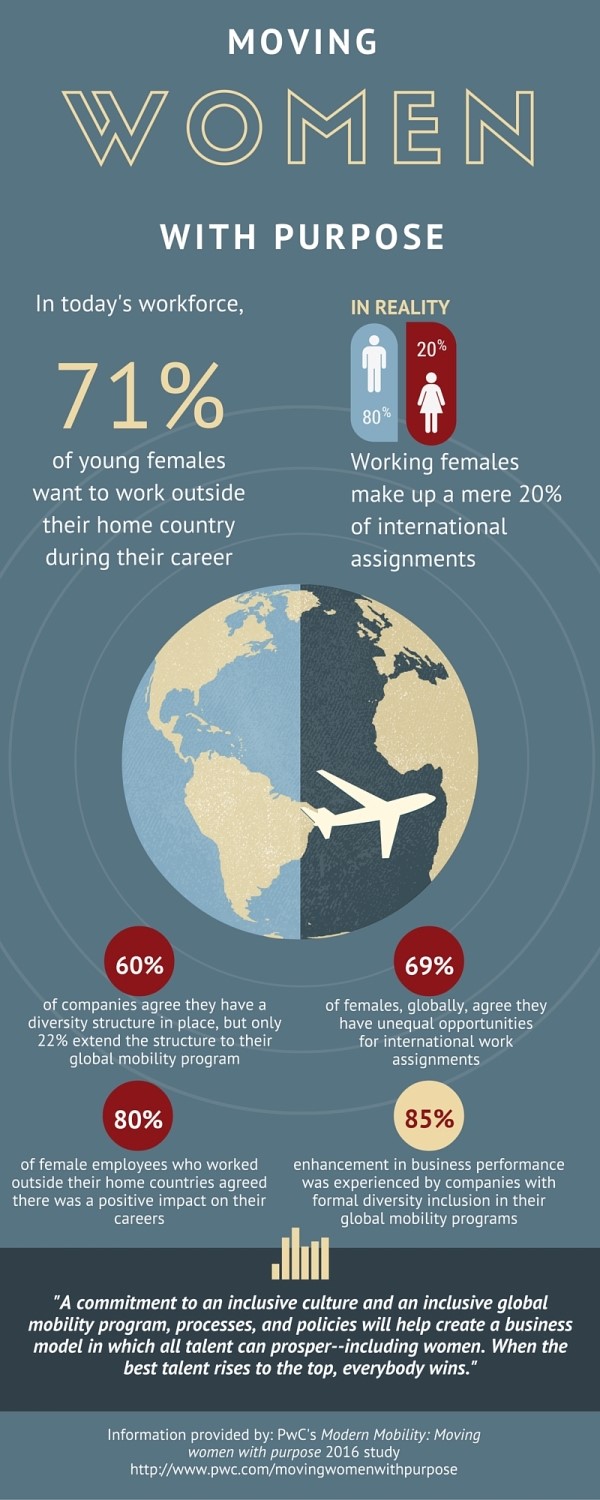

PricewaterhouseCoopers recently released a study detailing how much of an issue gender inclusion remains across the globe and related to international relocation opportunities.

While you may not offer international assignments to your employees, the study highlights key knowledge that every company should consider when crafting relocation policies:

  • Are you formally aligning your company’s diversity inclusion goals with your relocation program goals?
  • Are you offering equal relocation experiences amongst employees?
  • Are you offering relocation experiences to your most deserving employees, and not just to employees you believe most likely to accept the position?

View the full infographic for more information on creating an equal and prosperous relocation program for all involved:

emplooyee relocation

The Impact of Airbnb on Employee Relocation Costs

Each year, there seems to be a handful of new services that steal the media spotlight for their innovative business models and trending popularity amongst consumers. Last year it was Uber; this year it’s Airbnb—the online marketplace for people to list, find, and rent unique and personal lodging all over the world.

We’ve weighed the pros and cons of incorporating Airbnb in your employee travel policies, so you can be the judge of whether or not the “Worldwide Accommodations Leader” is a suitable replacement for your employees’ business travel, as well as relocation, needs.

relocation costs

While founded in 2008, Airbnb has been steadily gaining interest from corporations for business travel. According to CNNMoney, the number of corporations using Airbnb today for business travel is at least 1,000, and with the startup’s recent launch of its “Airbnb for Business” portal, which includes a centralized billing system and a dashboard for tracking employee spend, the number of corporate users is only anticipated to continue growing.

Like any successful startup, however, there’s a question of whether or not Airbnb, especially when provided as a service to your employees, is merely a trending perk or an impending addition to HR and relocation policies that’s here to stay.

What Airbnb Offers Business Travelers and Relocating Employees

  • Significant cost savings for large group travel
  • More flexible accommodations, such as parking spots, full kitchens, and office or meeting spaces for groups
  • More control over neighborhood location and the accommodations that work best for your employees
  • Can easily be added to your employees’ relocation Lump Sum policy for destination trips or temporary housing

Important Considerations for Business Travelers and Relocating Employees

  • Employees must feel comfortable and safe renting a personal home or apartment and with the neighborhood or street location
  • Particularly, female employees must feel comfortable and safe in the space if traveling alone
  • Opportunities for misleading accommodation information exists due to regulation issues, especially concerning shared parking spaces; use of Wi-Fi or cable or phone; A/C or heating capabilities; and safety features, such as smoke detectors, fire extinguishers, etc.
  • Property damage is possible (only certain items are covered under Airbnb’s insurance)
  • Unresponsive or fraudulent hosts have led to double-booked spaces or spaces rented out not by the actual owner

Whether your company is an Airbnb fan or not, special considerations must be taken before any new service is added to employee policy.

Helping Relocated Families Prepare for School

For employers and transferring families, making sure the kids feel comfortable in their new school is critical, as ensuring the support and backing of the employee’s family is what can make or break the overall success of a transfer. After all, isn’t it “family first”?
relocation

Remember: A move isn’t over when all the boxes are unpacked, so here are 6 tips to help recently relocated families with kids of all ages get off on the right foot at school.

1. Get Organized

Any parent knows a smooth start at school begins with organization—knowing pick up times, drop off times, and after school activity times. This year, have the employee take things a step further by creating a family scheduling center. This should be something placed in the kitchen, mudroom, or other common area that houses everyone’s schedule for the week or even the month. List important contact information, and try color-coding for each family member. While the employee will be starting a new schedule at work, the spouse and children will have their own new routines to get used to as well. Stick to the schedule and keep it visible for everyone.

2. Stock Up

The weekend before the first school day, do some meal prepping and stock the refrigerator with school-friendly foods: snacks on the go, paper bag lunch items, and have employees consider stocking up on the family’s favorite foods. They call it “comfort food” for a reason! Nothing will help family members feel more at home than their favorite meals. Better yet, have the kids join in on grocery shopping and stocking of the fridge. It will give them a sense of control in their new surroundings.

3. Map It Out

How will the kids get to and from school? Suggest the employee plan any pick up or drop off routes ahead of time. While it may be as simple as a bus route or mobile navigation system in the car, it’s always a good idea for parents and the kids to know how to get from point A to B without any outside help, should any emergencies occur. Take a drive and really get to know the new area.

4. Get Involved

Lots of parents enjoy getting involved in school activities, but for new families to the area, it’s even more important. For the parents as well as the children, getting involved means surrounding themselves with others their age in the hopes of making community ties stronger and easier. However, if a tight time schedule makes getting involved at school for your employees more difficult, there’s always getting to know the neighbors. A recently relocated family should never underestimate the feeling of support from building a stable community of friends.

5. Think Ahead

For an even stronger chance of settling in at a new school, think beyond just getting through the first weeks. Have the employee ask his or her kids to set personal goals to accomplish by the end of the term. This can be a sport in which to participate, grades they want to achieve, or activities they’d like to do outside of school with new friends. Setting goals places a positive spin on a new situation and will give everyone something to look forward to while settling in.

6. Expect Roadbumps

Finally, make sure employees understand that—no matter how organized they feel about their family getting back into the swing of things—there will always be the unexpected. The best way to deal with the unexpected when the kids are still adjusting is to experience the associated feelings—anger, “home” sickness, etc.—so everyone can understand what is causing the most discomfort. This will help you make a plan to move on. Some things will be out of their control, but working through it together is the key to keeping everyone on the right track toward feeling at “home” again.

Getting ready for a new school year following a big move doesn’t have to mean chaos. The more you can prepare ahead of time at home to make things go smoothly, the fewer opportunities there are for things that can go wrong.