Company Benefits of Offering Employee Relocation Packages

Searches for “Employee Relocation Package” have increased by 300% from November of 2023 to January of 2024. This article delves into the transformative power of these packages, shedding light on how they enhance the talent pool and contribute to a company’s success.

According to McKinsey & Company interviews with more than 100 chief human resources officers and people leaders, HR leaders are most focused on innovating the employee experience journey to win the race for talent. The data is clear: moving is the 3rd most stressful event a person can go through in their lifetime after the death of a loved one and a divorce. Therefore, your company must offer sufficient employee relocation program benefits to ensure your employees and their families have a positive experience (and perception) of your organization.

Offering company relocation packages to your employees will positively impact your recruiting efforts. Here are the top 5 benefits of offering comprehensive employee relocation program packages when hiring.

Benefits of Offering Employee Relocation Packages

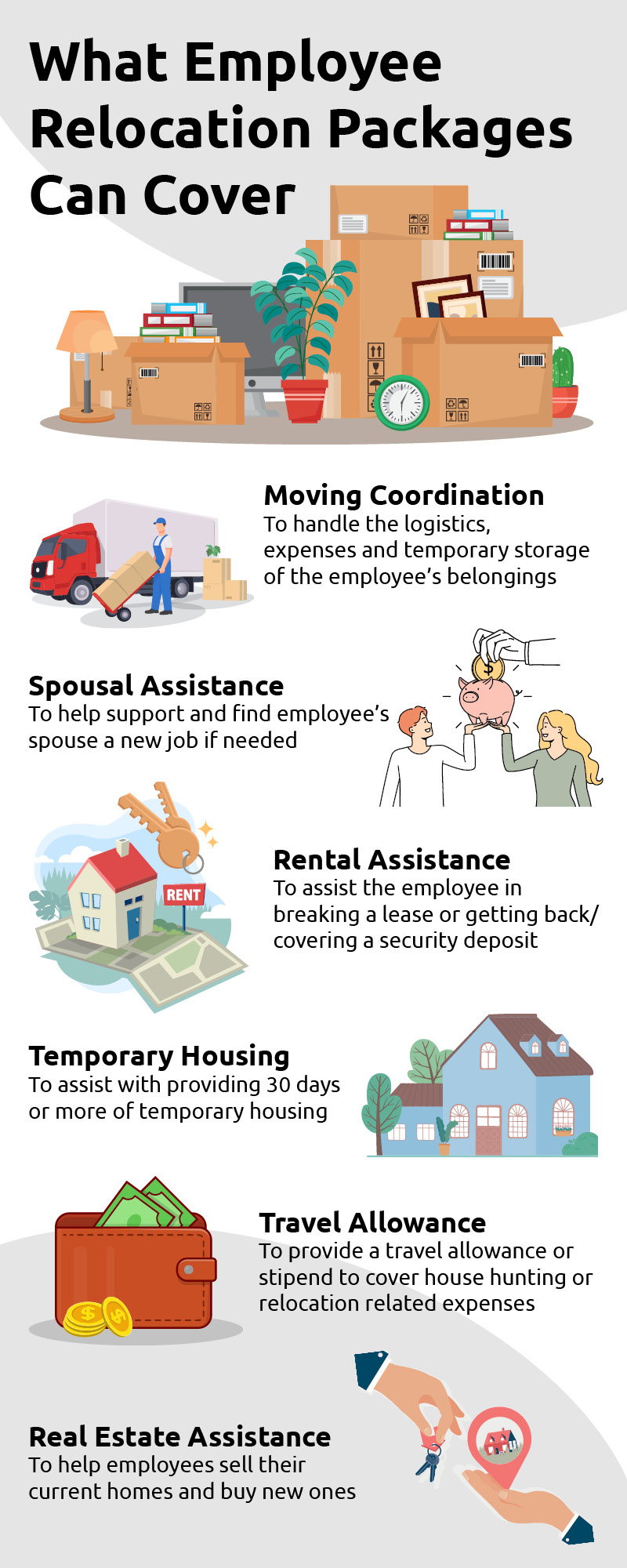
Some of the benefits that employees expect include the following:

  • Relocation allowances
  • Temporary housing
  • Assistance buying and selling their home (in new and old locations)
  • Spousal/partner and family support
  • Packing services
  • Paid house hunting
  • Rental car reimbursement
  • Household goods shipments
  • Visas and other immigration issues
  • Cultural assistance

Let’s make a point clear with company job relocations; it’s not only the employees who have an advantage, but companies also find moves to be beneficial. It adds noticeable value to the company in several ways. Therefore, it is time we take a detailed look into how employee relocation program packages benefit an employer.

1. Candidate Pool Is Widened

Most companies are looking for a talented and diverse workforce, regardless of size. At times, it can be quite challenging to find people within the same geographic location who have the proper skills and experience to give the company an edge over others in the industry. Expanding the search beyond the geographic location to a worldwide talent pool will give you more candidates with the required skills and knowledge to select from. You will be able to attract talent that otherwise could be hindered by the costs of a new location or apprehensive about relocating. The cultural diversity of the workforce can dramatically change, fostering new ideas and ways of thinking.

2. Reducing The Vacancy

When you offer a robust company relocation program package to talent, the international market for quality candidates will open for your company. This allows you to fill vacant positions faster and more efficiently. As a result, the entire enterprise can work expertly and effectively. Ensure you work with a relocation service, such as WHR Global, that can accommodate international relocation packages.

3. Helps Positive Company Brand Promotion

While many consider corporate relocation packages an employee benefit, it’s time to look at it from another perspective. Although a good company relocation package surely attracts candidates to a company, it also speaks about the enterprise. When a company says it cares about an employee’s transition and comfort with robust plans and relocation packages, it puts the company in a good light. The relocation benefit adds value to the enterprise and works as an excellent promotional feature, eventually attracting more international and domestic talent. It can foster quicker onboarding and productivity, thus increasing bottom line and employee satisfaction.

4. Improved Employee Retention 

A successful relocation package gives the employee a sense of commitment towards the company, knowing the company is taking care of them. Companies that pay for relocation can attract and retain talent by following these WHR Global six simple tips:

5. Knowledge Transfer  

When an existing employee goes to a new assignment as part of a company relocation, they will transfer unique knowledge and skills to this new location. In this relocation example, interacting with new people will also increase culture, experience, and expertise that will help develop new perspectives for the company. This type of relocation example eventually helps to make the enterprise stronger, have an international approach, and enhance its functional capacity. Companies that provide relocation assistance will have a leg up on the competition in an ever-competitive market for top talent.

Overall, a good employee relocation package gives your company a competitive edge over others by easily securing the industry’s top talent. Hire an employee relocation management company, like WHR Global, to take care of your global mobility program. Your company will reap the benefits in the long run if you support your employees throughout their corporate relocation package.

 

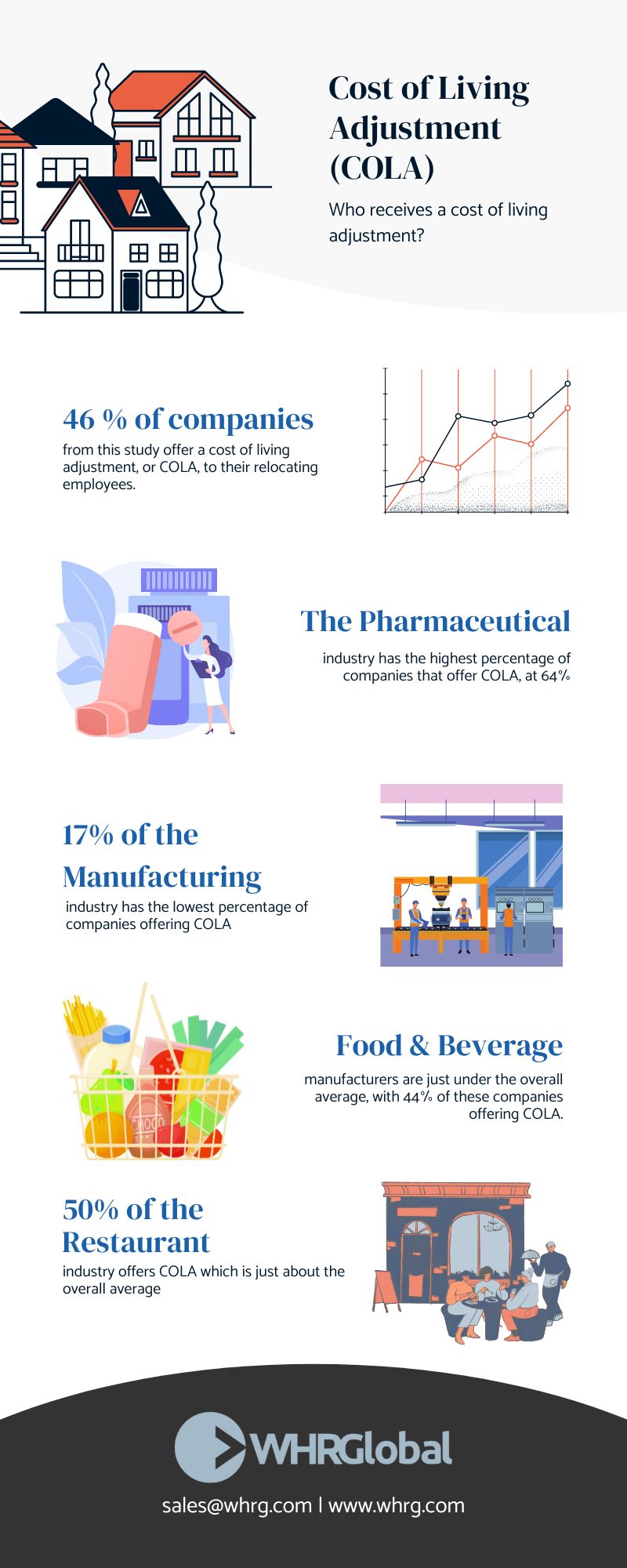
What is COLA (Cost of Living Adjustment)?

Cost of Living Adjustment (COLA) is a crucial aspect corporations consider when relocating employees or hiring talent from different geographical regions.  What is COLA? COLAs are payments designed to compensate employees for the higher cost of living they encounter in their new destination. Learn more about calculating cost of living adjustments, definition, and factors in cola payments.

Understanding Cost of Living Adjustment (COLA)

Cost of Living Allowances or Adjustments, commonly known as COLA, serve a common purpose: to bridge the gap between the cost of living in a low or moderate region and that in a higher-cost location. The employer compensates the employee based on housing, goods and services, and taxes, enabling them to maintain the same standard of living in their new area. This is the purest definition of a cola, but many nuances go into the calculation.

Calculating Cost of Living Adjustment

An accurate calculation is the foundation of a fair cost of living adjustment. Several providers offer services to calculate housing costs, goods, services, and other factors to determine the standard. The origination city’s cost index is then compared to the new town’s to identify the cost difference. Many employers have a limited number of potential locations for employee relocations, making it easier to assess cost indexes. Employers may also compare entire regions instead of individual cities for easy calculation. WHR can help our clients understand the COLA formula and make the best decision.

Factors in Calculating COLA

Employers must decide under what conditions they will offer a cost-of-living adjustment. The percentage of change in the cost of living between the locations is a critical factor in determining COLA. The question becomes, what is a standard cost of living raise? Some employers may require a cost-of-living shift greater than 3%, 5%, or 10% to provide the COLA. Those aiming to offer more generous benefits may set a lower threshold for cost-of-living changes to benefit a more significant number of employees. Every employer will determine their COLA benefits differently. The cost of living adjustment will also vary by employee and, of course, location. Many of these are case-by-case situations for COLA payments.

Duration and Payment of COLA

Once a COLA is determined to be provided, the next consideration is the duration and payment method. Traditionally, U.S. domestic COLAs are calculated once and paid as a lump sum allowance or distributed over a specified period. Companies may maintain the adjustment for an extended period to allow employees more time to adapt to their new location.

 On the other hand, international COLAs are recommended to be recalculated more frequently due to fluctuating currency rates, inflation, and other uncontrollable factors. For international assignments with pre-determined end dates, companies often offer the cost of living adjustment for the entire duration. However, if the assignment is open-ended, the company may transition the employee to the local standard of living (localizing) and discontinue the COLA after a set period.

Importance of Benchmarking

Relocation benefits can vary significantly across industries. Therefore, benchmarking your organization’s COLA policy against peers is crucial. Some industries may offer more frequent and generous COLAs, while others may not consider it at all. Understanding these variations can help determine whether a COLA adjustment or increase is needed. Ultimately, it can help you tailor your policy to meet your organization’s needs. The last piece to consider in benchmarking is understanding market rates in target relocation areas.

Conclusion

Cost of Living Adjustment is a vital tool/formula corporations use to ensure their employees can maintain the same standard of living when relocating to higher-cost locations. Companies can design worker compensation and relocation packages that attract and retain top talent by understanding the factors involved in calculating COLA and benchmarking against industry peers.

Improve your COLA benefits with our Allowances & Per Diems Benchmark.

WHR Global Releases Ask an Expert 2023 Allowances & Per Diems Benchmark Report

WHR Global Shapes Clients’ Policies to Ensure Allowances & Per Diems Are Competitive in the Market


Milwaukee, July 17, 2023 (GLOBE NEWSWIRE) — WHR Global (WHR), a leader in the global employee relocation industry, announced the release of its international 2023 Allowances & Per Diems Benchmark Report called “Ask an Expert!”

At WHR, our mission is to provide clients with superior relocation services, and to do so, we need to be in tune with the global cost of living. To accomplish this, we created the Ask an Expert 2023 Allowances & Per Diems Benchmark Report, a comprehensive guide to understanding the true cost of living, not just in one city, but in many cities worldwide.

“Drawing from my own personal experience as a former expat residing in Switzerland, and a former relocation coordinator, I bring a deep understanding of the challenges and intricacies of international relocation,” said Sean Thrun, Strategic Initiatives Manager at WHR. “This benchmark report and firsthand knowledge equips WHR with the ability to provide valuable insights and guidance to mobility teams, enabling them to navigate the complexities of global assignments more effectively.”

The Report includes 8.8 million price submissions from 11,000 cities, and prices benchmarked by country include rental prices for 1 & 3 bedrooms both inside and outside of city centers, common utilities costs per month, local transportation, and more. Understanding the ground realities of cost of living helps relocation teams create scalable solutions and helps businesses have more productive moves, making the transition for employees smoother than ever.

The Report allows businesses to “check the pulse” of their allowances and per diems, whether they choose to administer fixed amounts globally, or variable by location. If global mobility teams find that the allowances and per diems offered to their employees are lower than the average for that country, contact WHR today for a free consultation, including a breakdown of the benchmark report by city. 

Global mobility teams may use this Report, which covers 99 countries, to benchmark the following:

      • Monthly housing allowances for assignments & commuters,
      • Monthly utilities allowances for assignments & commuters,
      • Monthly transportation allowances for assignments & commuters, 
      • Transportation per diems for preview and home finding trips, and
      • Meal per diems for preview and home finding trips.

Whether you are a relocation manager or a business leader, investing in the Ask an Expert 2023 Allowances & Per Diems Benchmark Report today can help you make the most informed decisions for your relocation budget and employee benefits policies.

See more data and download the complete 2023 Allowances & Per Diems Benchmark Report “Ask an Expert” here.

The Ask an Expert 2023 Allowances & Per Diems Benchmark is intended for informational purposes only.

About WHR Global

WHR Global (WHR) is a private, client-driven global relocation management company distinguished by its best-in-class service delivery and cutting-edge, proprietary technology. WHR has offices in the United States, Switzerland, and Singapore. With its 100% client retention rate for the past decade, WHR continues to position itself as the trusted leader in global employee relocation. WHR lives by its vision and passion for Advancing Lives Forward® and Making the Complex Simple. To learn more about WHR, visit https://www.whrg.com/, or follow on LinkedIn or Twitter.


Media Contact: Sean Thrun, Strategic Initiatives Manager

[email protected]

+1-262-746-1314

6 Ways to Align Global Mobility & Talent Acquisition

Has your organization strategically aligned your global mobility and talent acquisition stakeholders? Or do your teams feel siloed with different priorities and understandings? Read below to discover 6 ways to align global mobility and talent acquisition teams, including insights from Reda Belabed, GMS, a global mobility and immigration leader previously with Honeywell and General Electric, and WHR Global’s Strategic Initiatives Manager, Sean Thrun.

You’re not alone if you feel your global mobility and talent acquisition teams aren’t working towards the same objectives! Fortunately, there are several common-sense steps you can take to improve your talent mobility and ensure these stakeholders are working as a cohesive team.

When global mobility and talent acquisition teams are aligned, your highly specialized employees are hired quickly and compliantly.

1. Distribute “How To” Relocation Guides to your Global Mobility and Talent Acquisition Teams for Core Locations

Distribute “How To” guides to your talent acquisition and global mobility teams. These should be mission-critical things they must know for your company’s core locations, including immigration, tax, and recommended relocation support. For example:

      • Your company regularly hires executives to work in your Netherlands Global Center of Excellence. Are your teams applying for the Netherlands’ 30% ruling? Is your talent acquisition team responsible for ensuring each applicant meets the 30% ruling’s requirements before presenting the job offer? For example, your talent acquisition representative must ensure the candidate has specific expertise, is recruited greater than 150 km from the Netherlands border, and more.
      • Due to the highly specialized nature of your business, you are recruiting internal and external candidates for a position in the U.S. Is your talent acquisition team familiar with U.S. visa types, such as the L-1 visa for intracompany transfers, or the H-1B visa for specialty occupations? Your talent acquisition teams should know the basic requirements for each visa type before attempting to source foreign talent.
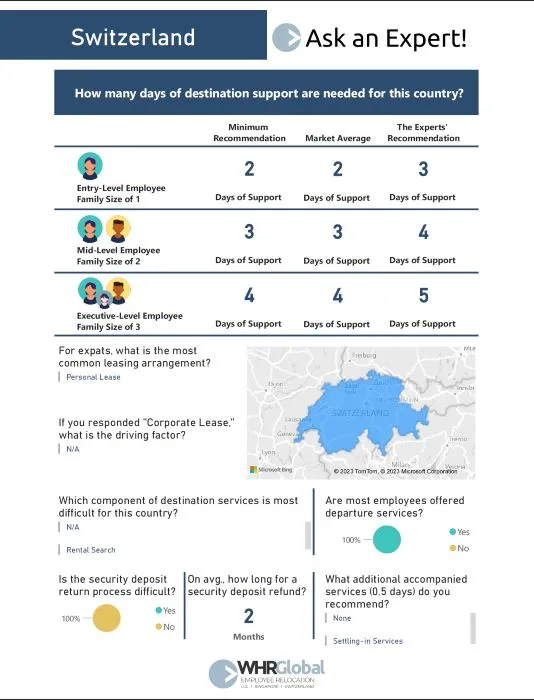
      • Your RMC should proactively guide the level of relocation support needed by country for your core locations. For example, this 2023 Destination Services Benchmark Report indicates the minimum, average, and recommended level of destination support by country, family size, and employee level. The report also indicates if leases should be personal or corporate, how long it takes to receive a security deposit return, and which components are most challenging.
WHR Global Ask an Expert Destination Services Benchmarking Switzerland

2. Review Talent Acquisition Metrics such as Time-To-Fill

Unfortunately, TA (talent acquisition) is not only measured based on the volume/quality of positions filled but mostly on the Time-To-Fill (TTF) which often widens critical gaps between the organizational needs, candidates’ experience and the tough reality of compliance.

I’ve implemented a cross-functional pre-assessment process for what I called “Immigration Hire-ability”, where permissible by law. Where it has been applied, I’m quite comfortable with the level of partnership it managed to increase between the two functions (and ultimately mitigate the risks of “bad hires”). In other places, Data Privacy regulations along with Fair-Employment Practices appeared to be hurdles to the implementation. There’s not a lot of flexibility when it comes to Labor and Employment, through Works Councils and the likes and it’s really been a challenge.

One of the plasters we have been focused on in these instances is increased (and repeated) training and education sessions with the recruiters to get them up-to-speed with “what they need to look out for/how to identify red flags” and review the overall communication strategy (up to offer accept), to enable all stakeholders to have a better understanding of the potential risks inherent to the hiring of Candidates on an immigration status and/or sponsorship requirements and responsibilities (incl. cost, timelines, immigration lifecycles, as well as talent management strategies).

I guess we’re all progressing but there’s still a long way before we can say we’re comfortable with the level of collaboration and partnership, with a 100% Candidate satisfaction, an improved TTF metric and a satisfactory pre-hire Immigration Compliance assessment.

Reda Belabed, GMS

Global Mobility & Immigration Leader, Previously at Honeywell & General Electric

3. Implement Pre-Acceptance Checkpoints to Increase Success Rates

As alluded to above, mobility programs can greatly increase assignment acceptance and success rates by implementing various pre-acceptance checkpoints.

      • Retain the services of a reputable tax firm. In addition to country briefings for assignees, they can provide invaluable guidance to talent acquisition teams. At a minimum, ensure your talent acquisition teams are familiar with the concepts of tax assistance, equalization, and totalization agreements. Provide pre-acceptance tax briefings to all foreign applicants.
      • For country-specific tax briefings, applicants should be aware of their options before accepting the position, as any misunderstandings can greatly increase the risk of a failed relocation or assignment. Assignees (especially those within executive or director-level positions) may have complicated investment portfolios of stocks, stock options, bonds, real estate holdings, precious metals such as gold, etc. The employee’s options will vary greatly depending on the location, citizenship(s), and relocation type (permanent transfer, long-term assignment, short-term assignment, commuter, business traveler). 
      • As mentioned above in step 2, build your own cross-functional pre-assessment process (a.k.a. immigration hire-ability guide) where the law permits. However, you should be cognizant of challenging jurisdictions such as the United States and European Union, as further detailed by Reda Belabed:

    Countries like the US where questions can be limited to “will you or in the future require sponsorship” and other EU countries where requesting personal information/data can be considered as PII and a hinderance to fair employment practices/discrimination at hiring. Geographies like the Middle East (GCC, in particular) are more open to these assessments.

    Authorities having a long history of foreign and diverse workforce tend to allow/promote the recourse to hireability checks based on sponsorship requirements but also advocating for more transparency in terms of “quotas”. Not that nationality quotas are something to condone, but the transparency around it helps the pre-determination of feasibility – instead of engaging with candidates through the offer stages only to discover it may not be possible. From an organizational standpoint, the process is quite transparent and streamlined.

    Reda Belabed, GMS

    Global Mobility & Immigration Leader, Previously at Honeywell & General Electric

    4. Pre-decision Calls through your Relocation Management Company (RMC)

    Your global mobility team and RMC may also choose to implement pre-decision calls. In relocation management, pre-decision calls ensure that the candidate understands the relocation package they’ll be receiving. However, they’re also an opportunity for your RMC to promote your company and benefits package and alleviate any concerns the employee or family may have.

    Pre-decision calls also prevent discrepancies or misunderstandings once the employee accepts the offer and begins the relocation process. For example, after the pre-decision call, the employee knows exactly which package they will receive, how much each relocation allowance will be, and more. Oftentimes, there is a disconnect between the relocation package quoted by a talent acquisition or HR business partner and the relocation package implemented by the RMC. This may boil down to human error or someone operating on an old/outdated policy. These discrepancies can be minimized when the RMC explains the relocation package pre-decision and implements the relocation package post-acceptance

    Align Global Mobility & Talent Acquisition

    5. Optimize Your HRIS for Maximum Talent Mobility

    Your organization can maximize talent mobility by creating custom fields, objects, and reporting in your HRIS (human resources information system). For example, in ADP, your organization can build and manage a talent pool of applicants willing to relocate for open positions. However, your organization shouldn’t overlook existing employees willing to relocate for an intracompany transfer. Existing employees should understand your products, services, and expectations, reducing hiring and training costs. 

    According to SHRM benchmarking, the average cost of hiring an executive is $28,329 USD. However, many employers estimate that the total cost to hire a new employee can be three to four times the position’s salary. This is a combination of hard costs, such as recruiters, and soft costs, such as the time it takes for department leaders and managers to support the hiring and training process.

    Instead of sourcing new candidates from scratch, speak with your IT department about adding custom fields and objects and reporting to your HRIS system. Then, existing employees can indicate in their HR profile if they’re willing to relocate for a new position. Within the custom reporting, you can also add filters to narrow your talent pool to high-performing employees who are willing to relocate, combined with past performance reviews already loaded in the HRIS.

    Online recruitment application and one day specialist search service concept with man finger on virtual digital interface with personal cards with rating

    6. Conduct Regular Training Sessions With Talent Acquisition Teams

    Regular training sessions ensure your talent acquisition teams have access to the same systems, resources, and responses to questions that are frequently asked by candidates pre and post-acceptance. Training sessions also provide new talent acquisition team members an opportunity to learn more about the mobility packages your employees are receiving and reinforce the message that all talent acquisition teams should follow the same standardized processes.

    Relocation management companies regularly arrange training sessions with talent acquisition teams and relevant stakeholders to improve talent mobility. These training sessions can include:

        • On-site training sessions from the relocation management company for mobility, TA, and HR teams. Depending on the size of your mobility program, your RMC may conduct these training sessions for free or just request your company to cover hotel and travel costs (depending on the distance and duration).
        • Virtual webinar-style training sessions from the RMC.
        • Country or region-specific training for your organization’s key locations, or locations presenting unique difficulties.
        • Insights from destination services providers (DSPs) and rental agents around market updates, cultural norms, and best practices.
        • Guidance from immigration firms on red flags, quotas, estimated timelines, minimum salaries, labor market testing requirements, and more.

    We have achieved significant success in transitioning regional structures to a centralized global mobility program by conducting regular training sessions with talent acquisition leaders. These sessions primarily focus on journey maps and crucial considerations throughout the process. By actively involving regional TA stakeholders in discussions about mobility benefits and desired outcomes, we have observed a noticeable increase in their willingness to adopt standardized processes.

    Sean Thrun

    Strategic Initiatives Manager, WHR Global


    In conclusion, aligning global mobility and talent acquisition teams is crucial for organizations to ensure efficient hiring and successful talent mobility. By distributing relocation guides, reviewing talent acquisition metrics, implementing pre-acceptance checkpoints, conducting pre-decision calls, optimizing HRIS systems, and conducting regular training sessions, organizations can foster collaboration and enhance the effectiveness of these teams. Achieving alignment leads to the swift and compliant hiring of specialized employees, reduces risks, improves time-to-fill metrics, and ultimately enhances overall candidate satisfaction and immigration compliance. Continued efforts and investment in aligning these teams will contribute to a more streamlined and successful talent acquisition process.

    Moving Industry Updates Your Global Mobility Team Should Know

    Here are the moving industry updates your global mobility team should know. In this article, we’ll hear from the President & CEO of Aaversal Global Relocation, Hosea Bottley, as well as WHR Supply Chain Manager Adam Rasmussen. As always, your employee’s best chance at a successful move is to plan ahead, stay flexible with changes, and give plenty of advanced notice!

    Moving Industry Updates Your Global Mobility Team Should Know 2023

    Peak Season in the Moving Industry

    In the U.S., Memorial Day is right around the corner and the weather is heating up. For many of us, that means more time outside and enjoying friends and family get-togethers. For the household goods moving industry, that means something entirely altogether different. Summer volume in the moving industry tends to be much heavier than other times of the year. Peak season in the moving industry is from May to August. In fact, WHR estimates that half of the total shipments annually take place during this period. With that in mind, it is important to be prepared for the heavy volume if you are planning a relocation during this timeframe.

    According to the US Census Bureau, there was a decline in moves from 2019 to 2021 (no doubt related to the COVID-19 pandemic). However, a market research report by Technavio also expects the moving services industry within the United States to accelerate at a compound annual growth rate of 2.04% from 2021 to 2026. These fluctuations, paired with peak season, are difficult to forecast for moving companies. This typically exacerbates the undersupply of labor in peak season. Relocating employees should ideally request their pack and load dates 4-6 weeks in advance to ensure their preferred dates can be met.

    Insights from Aaversal Global Relocation

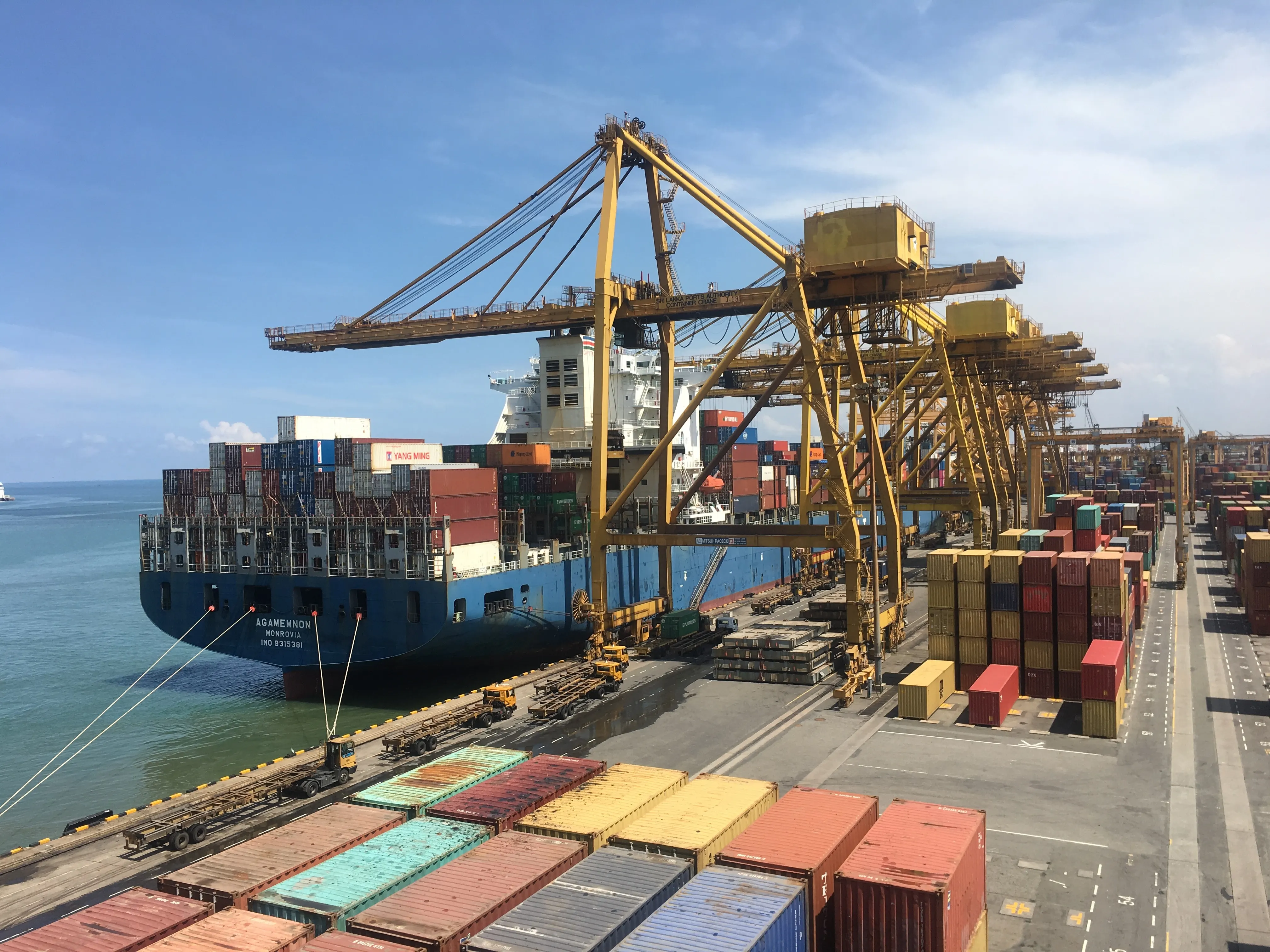
    The biggest issue is transportation of lithium batteries for GSA shipments... Capacity is not an issue at this time. Some agents are 2-3 weeks out, last year it was 5-6 weeks for some agents. There is no port congestion at any of the ports at this time. Trucking drayage (the transport of freight from an ocean port to a destination) is 3-5 days versus 2-3 weeks last year.

    Hosea Bottley

    President & CEO, Aaversal Global Relocation

    Insights from WHR Global

    We are cautiously optimistic after several years of extremely volatile volume and rates in the international shipping industry. Things appear to be settling into a “normal” rhythm in terms of volume and pricing.

    Container shortages, port congestion, and overall supply chain disruptions and issues do not appear to be as rampant in international shipping. However, that doesn’t mean that international shipping will be easy with no challenges as summer is a busy time of year to ship internationally as well.

    Many carriers have implemented general rate increases in preparation for the peak season, particularly out of the Asia-Pacific region. The best chance for your global mobility teams to have successful relocations is to:

    • Plan ahead,
    • Give plenty of notice, and
    • Be flexible with changing dates, increased shipping times, or fluctuating rates.
    Adam Rasmussen

    Supply Chain Manager, WHR Global

    WHR Global’s Supply Chain Department is well prepared for the 2023 summer peak moving season. After navigating the supply chain crises of the past few years, we continue to monitor the moving industry while building and maintaining relationships with quality supplier partners. Through WHR Global’s Opportunity Board and Move Management Platform (MMP®), we can find the right provider for each transferring employee on a case-by-case basis while keeping our clients apprised of moving industry updates.